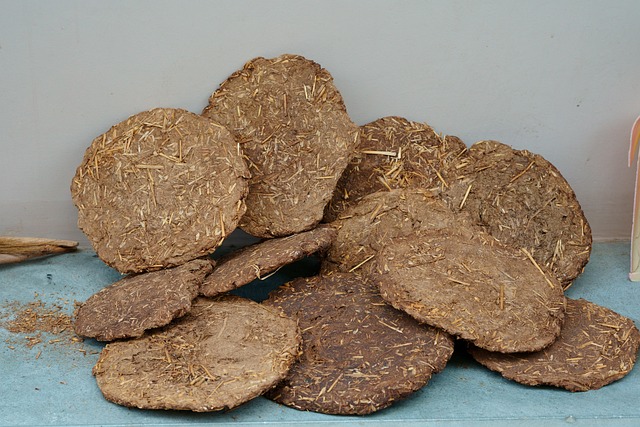
cow dung cake is eco-friendy product and it does not harm environment
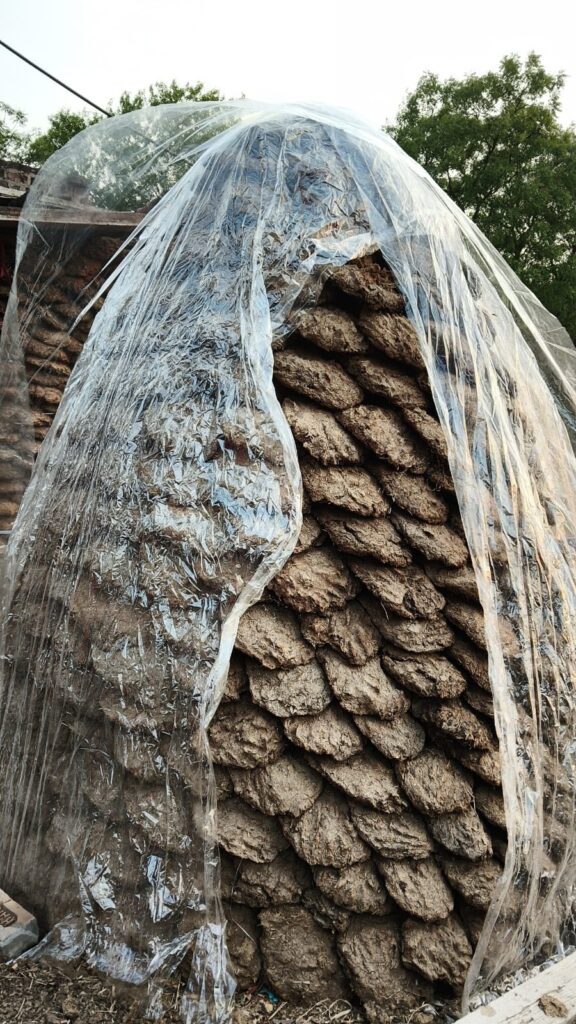
Cow dung cake utilization can become a successful business by combining traditional knowledge with modern business strategies to create sustainable income sources. With increasing focus on Zero-waste policy and Organic-farming, this business have a bright future. It is a green enterprise that requires a broader approach at the rural level to unlock its full potential, allowing this sector to contribute to both environmental sustainability and economic growth. In essence, cow dung can be seen as a hidden goldmine in the form of waste, needing only greater attention and awareness.
- Cow dung cakes, commonly known as uplas, continuous be widely used for rituals, household purposes, and even exports. In recent years, people have also begun transforming cow dung into eco-friendly products such as diyas, incense sticks, pots, seed balls, and various decorative items. Some innovative startups are using cow dung to extract fiber, which is then converted into biodegradable packaging materials and paper, offering a partial alternative to wood pulp and plastic. Recent research has also explored the use of cow dung logs in construction, such as in bricks and plaster. These materials are cost-effective and provide good insulation against heat during summers.
- Eco-Innovation with Cow Dung: From Rural Waste to Valuable Products
In today’s world, where sustainable solutions and the circular economy are gaining importance, transforming waste into valuable products has emerged as a profitable and eco-friendly business opportunity. India, being the world’s largest milk producer, contributes nearly 25% of global milk production and continues to grow at an annual rate of about 5.7%. The country generates approximately 3 million metric tonnes of cow dung every day, which holds immense potential as a resource. However, many rural communities are still unaware of its diverse applications, despite having a significant cattle population. Even today, its use in villages is largely limited to fuel and organic fertilizer. Interestingly, Indian traders have recently exported cow dung products worth ₹400 crore to countries such as Kuwait, the USA, and the Maldives. This highlights the growing global demand and untapped potential of this resource. Overall, the utilization of cow dung for products like manure, biogas, and eco-friendly logs presents vast opportunities for rural entrepreneurship, green innovation, and income diversification.
The primary focus is on cow dung, as it is a rich source of organic matter and also possesses antibacterial properties. While rural households traditionally use it for flooring, fuel, and fertilizers, modern science has expanded its potential by exploring a wide range of innovative applications, treating it as a valuable raw material. For instance, converting cow dung into vermicompost or organic manure is a promising business opportunity, as both consumers and farmers are increasingly willing to pay a premium amount for products marketed as chemical-free or natural. Secondly, biogas serves as a cost-effective alternative to LPG and electricity for cooking and heating. Additionally, the byproduct of biogas production—slurry—is a high-quality fertilizer. The government also provides subsidies to dairy owners for setting up biogas plants; however, the main challenge remains the lack of awareness among people.- cow dung utilisation is a perfect example of how traditional knowledge can b e combined with modern business strategies to create sustainable income streams. Whether you are a rural entrepreneur, a startup enthusiast, or someone looking to invest in green businesses, this sector offers a unique opportunity to generate profit while contributing positively to the environment. Turning waste into wealth has never been more relevant—and cow dung might just be the goldmine hiding in plain sight. cow dung cakes are eco-friendly